To a student, a Pondery assessment feels like talking something through with a patient tutor. There's no page to fill in. They explain what they understand, and the tutor keeps asking until it's clear what they do and don't know.
Before they start
The first time a student signs in, Pondery introduces itself and tells them plainly that their teacher can read their conversations. They find your assessment in the space you put it in, under the name you gave it.
During the conversation
The tutor starts by checking in on how they're feeling about the material, then works through the plan you approved, in order. It responds to what each student says, so no two conversations are the same.
- It won't hand over the answer. It asks the next question instead, and helps a student get there themselves.
- It stays on your material. It works from the content and scope you chose.
- It probes shallow answers. If a reply sounds right but doesn't show understanding, it asks for the reasoning.
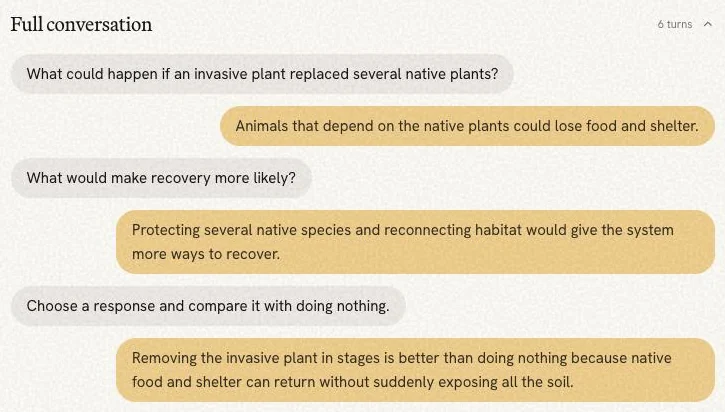
Your rubric and plan stay private. Students see the conversation, not the criteria behind it. Here's a short exchange as it appears in your results:
Want to feel it for yourself? Try the demo on our home page as a student.
When they finish
Once the plan is complete, the conversation is submitted and a report lands in your results. A student who hasn't finished shows as in progress. Your results page lists who has finished, who's partway through and who hasn't started. The recommended grade stays on your side and doesn't appear in the student's view.
Introducing it to your class
A couple of minutes before the first one goes a long way. Here's what we suggest telling students:
- This is a conversation about what you've learned, so it's fine to think out loud.
- If you don't know something, say so. The tutor will help you work it out.
- Your teacher reads these conversations and decides your mark. The tutor doesn't.
- Use your own words. Your teacher is looking for your thinking, not a perfect sentence.
Running a first assessment as low stakes also helps. Students get used to the format, and you get a clear picture of where the class stands.